
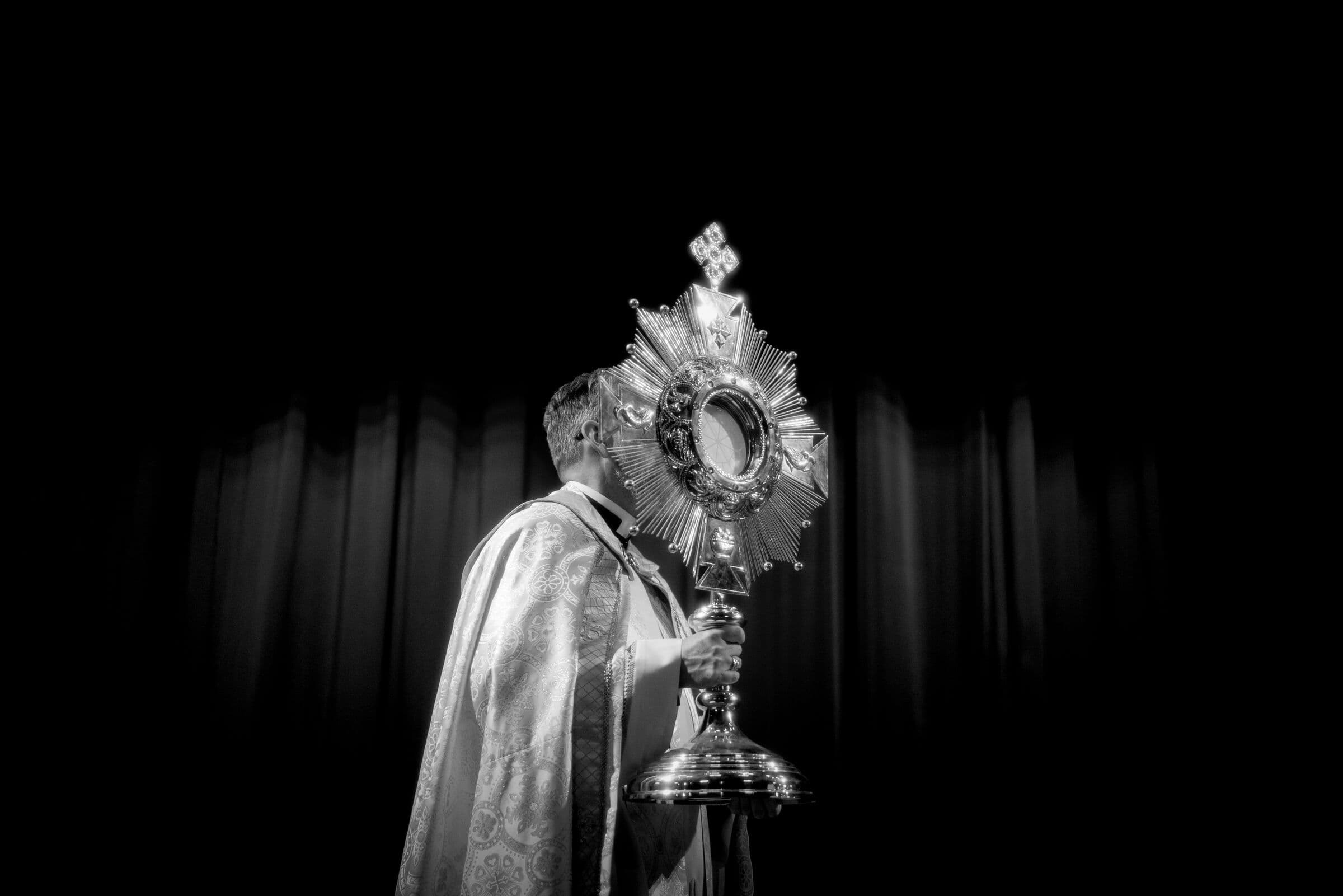
Diploma Level
The final level of theological experience exposes the student to seven modules. A deeper understanding of Christology, an Introduction to the Fourth Gospel, an Introduction to Canon Law, an Introduction to Mariology, an Introduction to Pastoral Theology, an Introduction to Moral Theology and a Catholic Perspective of Anthropology. Reaching this level of a theological experience actually should entice the seeker to go deeper and farther. Learning theology actually does not come to an end; it is a continuing experience because God firmly resides in the seeker’s life and his or her personal salvation history transforms from a kronos to a Kairos.
- Coordinator: Rev. Fr. Anton Dinesh Priyasad
- Modules: 7
Modules:
- Lecturer: Rev. Fr. Anton Dinesh Priyasad

Needless to say, Mary, the Blessed Mother of Jesus, is so central in the mystery of salvation in Catholic Theology. Being Marian is being truly Catholic. Hence, this course proposes this module on Mariology; or the theological study about Mary and her role in the mystery of salvation. The module covers topics such as Mary in the Old Testament, Mary in the Synoptic Gospels, Mary in the Gospel of John and in the Book of Apocalypse, Mary in the writings of St. Paul and Patristic Theologians, The Divine Motherhood of the Blessed Virgin Mary, The Assumption of Mary, Virginity of the Blessed Mother, The Immaculate Conception of the Virgin Mary, Marian imprint in the Second Vatican Council in Lumen Gentium and Mary in the writings of Pope St. John Paul II.
What You Will Learn:
- Mary in Scripture and Tradition
- Divine Motherhood of Mary
- Marian Dogmas and Doctrines
- Mary in Patristic Theology
- Vatican II Mariology
- Mary in Papal Teaching
- Lecturer: Rev. Fr. Rasika Perera

This rather extensive module deals with another important subject in any theology course. At a time when many conventional moral values are being desecrated mercilessly, and new ethical and moral values are forced into human society, the Catholic Church still hold the fort valiantly. For any student of Catholic theology, this study is helpful to understand the rationale behind the moral principles upheld by the Church for centuries, and also to prepare the student to defend these moral standards. Among the many topics dealt with in this module, the following are only a few: Moral life an expression of faith, definition of Moral Theology, Veritatis Splendor, Humanae Vitae and the explosion of dissent in the Church, Sources of Moral Theology, the use of Sacred Scripture as a base for Moral Theology, The Decalogue, the Magisterium as a source for Moral Theology, etc. etc.
What You Will Learn:
- Definition and Nature of Moral Theology
- Sources of Moral Theology
- Sacred Scripture in Moral Teaching
- Papal Encyclicals on Morality
- The Decalogue in Catholic Ethics
- Magisterium and Moral Authority
- Lecturer: Rev. Fr. Jude Shalindra Kotikawatte
Pope St. Paul VI, on 25th May 1968, addressing the Second International Congress of canonists in Rome, said the following: Young people, both priests and laity, and especially priests, must be encouraged to take up the study of Canon Law in ever greater numbers from all parts of the world. Any disciplined institution needs regulation to uphold its vision and doctrine, and its morals and worship. This module covers a wide range of topics related to this subject, such as, Historical development, Sources and structures of Canon Law, Ecclesiastical laws, General Decrees, The power of governance, Canon Law pertaining to Liturgical rites etc. and will take the student through the essentials of this discipline.
What You Will Learn:
- Historical Development of Canon Law
- Sources and Structures of Canon Law
- Ecclesiastical Laws and General Decrees
- Power of Governance
- Canon Law and Liturgical Rites
- Essential Canonical Principles
- Lecturer: Rev. Fr. Alvin Peter Fernando

The purpose of the course is to help students appreciate the different style and theology of the Fourth Gospel compared to the Synoptic Gospels. The language of the Fourth Gospel is different, and even at times unfamiliar. For instance, the Fourth Gospel does not use the word miracles for the wonder works performed by Jesus. It uses the word Signs. The Gospel has its own structure and its theology which makes the student mesmerize about the authorship of the Bible. The course contains the following material: Composition of the Fourth Gospel, Sources of the Fourth Gospel, Background of the Fourth Gospel, The Church of the Beloved Disciple, Audience and Purpose of the Fourth Gospel, Literary Features of the Fourth Gospel, The Plot and the Characters of the Fourth Gospel, Theology and Christology of the Fourth Gospel, Structure of the Fourth Gospel.
What You Will Learn:
- Composition and Sources of John's Gospel
- Background and Historical Context
- Audience and Purpose
- Literary Features and Structure
- Characters and Plot Development
- Johannine Theology and Christology
- Lecturer: Rev. Fr. Jayalath Balagalle, OP

Pastoral Theology is a branch of Theology which teaches how to put the teachings of the Church into practice. Its main concern is the pastoral care of the faithful. Actually, Pastoral Theology essentially speaks of how the ministers of Christ put their service into practice. Hence, it is actually a Practical Theology. The module covers the following topics: What is Pastoral Theology? Pastoral Theology is a Practical Theology, Pastoral Theology is meant for all Christians, Definitions of Pastoral Theology, Concept of a Shepherd in the Old Testament based on Ezekiel 34, Jesus the Good Shepherd, Pastoral Constitution on the role of Bishops, Pastoral Constitution on the Priestly ministry, Historical growth of a Parish, Parish is for the people – The Parish structures must be changed according to time and the present needs.
What You Will Learn:
- Nature of Pastoral Theology
- Practical Theology Application
- Shepherd Concept in Scripture
- Jesus as Good Shepherd
- Pastoral Constitution Teaching
- Parish Structure and Development
- Lecturer: Rev. Fr. Alex Nilantha Ediriwickrema
Man is at the most important recipient of the mystery of salvation. The Greek word for man is ho anthropos. Anthropology is the subject which studies man, and the module proposed within this course is A Catholic Perspective of Anthropology. Before dealing with the Christian understanding of man, the student is taken through an academic exposure to know about Philosophical anthropology. Thereafter, a Theological understanding of man or a Theological anthropology is studied with reference to the Bible and very specially to Jesus Christ, true God and true Man. The module also covers topics such as embodiment of man as male and female, human action (covering areas such as life, knowledge, self-consciousness, freedom, dignity, language, culture and work), being as human, human condition and man and divinization.
What You Will Learn:
- Philosophical Anthropology
- Theological Understanding of Man
- Biblical and Christological Anthropology
- Human Embodiment and Gender
- Human Action and Consciousness
- Human Condition and Divinization
- Lecturer: Rev. Dr. Cecil Joy Perera
Christology is the field of study within Christian theology which is primarily concerned with the nature and person of Jesus as recorded in the canonical Gospels and the epistles of the New Testament. Primary considerations include the relationship of Jesus' nature and person with the nature and person of God the Father. As such, Christology is concerned with the details of Jesus' ministry, his acts and teachings, to arrive at a clearer understanding of who he is in his person, and his role in salvation. This module covers topics such as Jesus as the source of Christology, Tensions between historical Jesus and Christ of faith, Christological titles, Patristic debate over the person of Christ, Conciliar development of Christological thought, Christology of the Reformation, Christological reflections of prominent theologians of the 20th century and some critical expositions of the contemporary Christological models.
What You Will Learn:
- Jesus as Source of Christology
- Historical Jesus vs Christ of Faith
- Christological Titles and Patristic Debates
- Conciliar Christological Development
- Reformation Christology
- Contemporary Christological Models